 Skip to content

For decades, audit meant ledgers, checkmarks, and testing a sample to judge the whole. In today’s era of big data and digital integration, the traditional manual, sample-based model is an outdated relic of the past. The profession is undergoing a fundamental transformation, shifting from manual, retrospective checks to intelligent, continuous, data-driven assurance.
What is Data Analytics in Audit? The Core Concept
Data analytics in audit is the systematic process of identifying, acquiring, and analysing data to generate evidence-based insights and enhance assurance.
The terminology itself is instructive. ‘Data’ (from Latin datum, ‘a piece of information’) is the raw material. ‘Analysis’ (from Greek analyein, ‘to unloose’) is the act of breaking it apart. Therefore, audit analytics is about unloosing the truth within data.
This creates a powerful, simple workflow central to modern audit methodology:

- Organisational Data: The foundation. Structured and unstructured data from ERPs, CRM systems, logs, and more (e.g., all vendor payments or system access records).
- Analysis Techniques: The examination. Using methods from basic deviation analysis to advanced algorithms to test controls and identify anomalies.
- Meaningful Insights: The outcome. Actionable, evidence-backed observations that drive decision-making and strategic advice, such as pinpointing control gaps or fraud red flags.
Understanding this flow is critical to bridging the gap between business acumen and technical data competency—a skillset identified by industry leaders as essential for the future auditor.
The Imperative: Why Analytics is Unquestionable
The case for adoption is unequivocal. Research indicates that a significant majority of Chief Audit Executives cite missed data insights as a top concern. Relying on traditional sampling in a big data world is a significant risk.
Modern audit frameworks position analytics as key to unlocking strategic value, enabling audit functions to:
- Shift from sample to population testing, analysing 100% of transactions for comprehensive coverage.
- Move from retrospective to proactive assurance, identifying emerging risks and anomalies in real-time.
- Enhance precision and objectivity, basing findings on empirical evidence rather than inference.
- Increase efficiency and scope, automating routine tests to focus resources on higher-risk analysis and advisory activities.
In essence, analytics transforms the audit from a periodic exercise to a dynamic, value-adding function.
Building Capability: The Data-Literate Audit Team
Technology alone isn’t the solution; people are. The profession needs data literacy—the ability to read, understand, create, and communicate data as information.
Modern audit departments, as reflected in leading consultancy models, often cultivate a tiered competency model:
- Data-Informed Auditors: All team members interpret visualisations and data-driven findings.
- Citizen Data Analysts: Auditors who can self-serve using managed analytics tools for extraction and basic analysis.
- Audit Data Specialists: Experts who develop advanced scripts, manage continuous auditing, and deploy predictive models.
This structure democratises data use, allowing the broader team to generate insights while specialists focus on complex challenges.
Strategic Application: The Targeting Matrix
Not every process requires advanced analytics. Applying resources strategically is crucial. A Risk vs. Data Quality Matrix, common in modern audit methodology, provides clear guidance.
| High Risk | Low Risk | |
|---|---|---|
| High Data Quality | Primary Analytics Zone (e.g., Financial Reporting, Treasury) Action: Deploy analytics for deep testing & continuous monitoring. | Efficiency Zone (e.g., High-volume procurement) Action: Use analytics for efficiency; calibrate effort to risk. |
| Low Data Quality | Diagnostics Zone (e.g., Legacy system processes) Action: Use analytics to assess data integrity and control gaps first. | Traditional Zone (e.g., Manual reconciliations) Action: Judicious use of analytics; manual controls may suffice. |
How to use it: Plot your audit universe. Prioritise the Primary Analytics Zone (High Risk/High Quality) for maximum assurance impact and ROI.
The Modern Audit Workflow: Integrated Analytics
Analytics is not a separate activity; it’s embedded throughout the audit lifecycle, creating a seamless, evidence-based workflow.
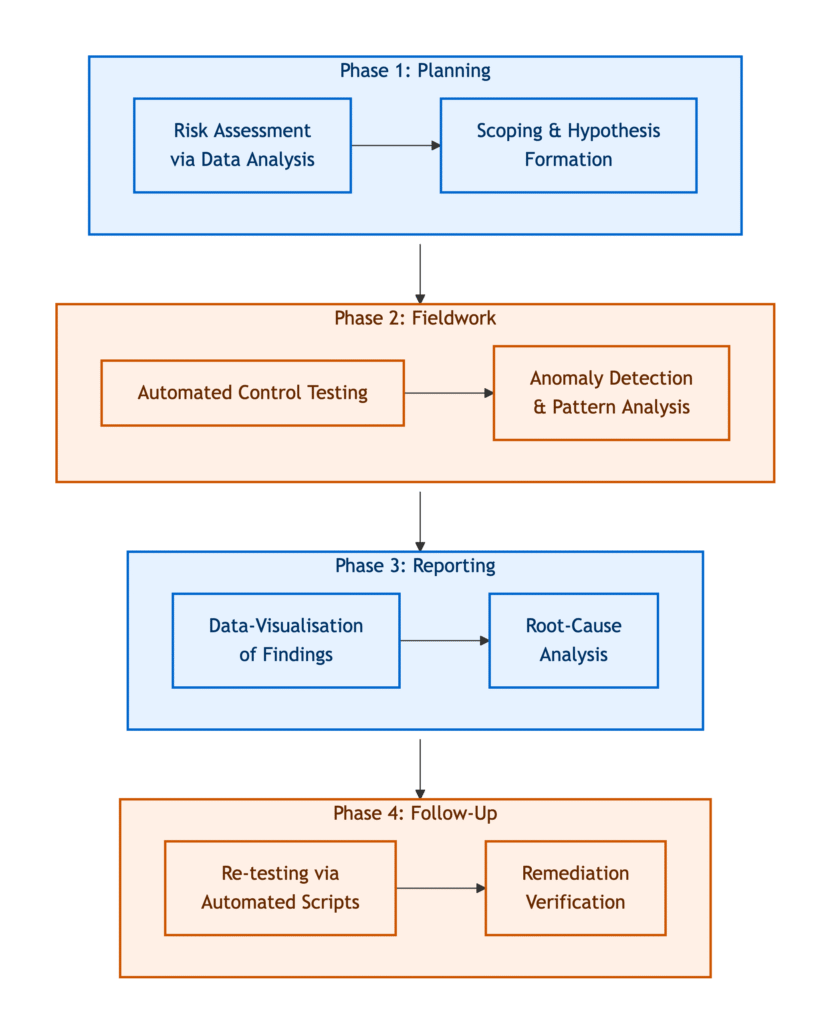
This integrated model ensures data is the connecting thread from planning to verification, enhancing quality, consistency, and insight.
The Path Forward
The integration of data analytics is a definitive marker of a modern, value-led audit function. It’s the shift from providing historical assurance to offering forward-looking insight and enabling organisational resilience.
The journey begins with strategic prioritisation, targeted capability building, and the phased integration of analytics into core audit processes. Start by targeting high-impact areas in your audit plan, empower your team with foundational data literacy, and leverage technology to unloose the strategic insights within your organisation’s data.
Ready to advance your audit function? Explore Global Forum Consulting’s structured toolkit on building data analytics competency, featuring use cases, implementation roadmaps, and capability frameworks.


